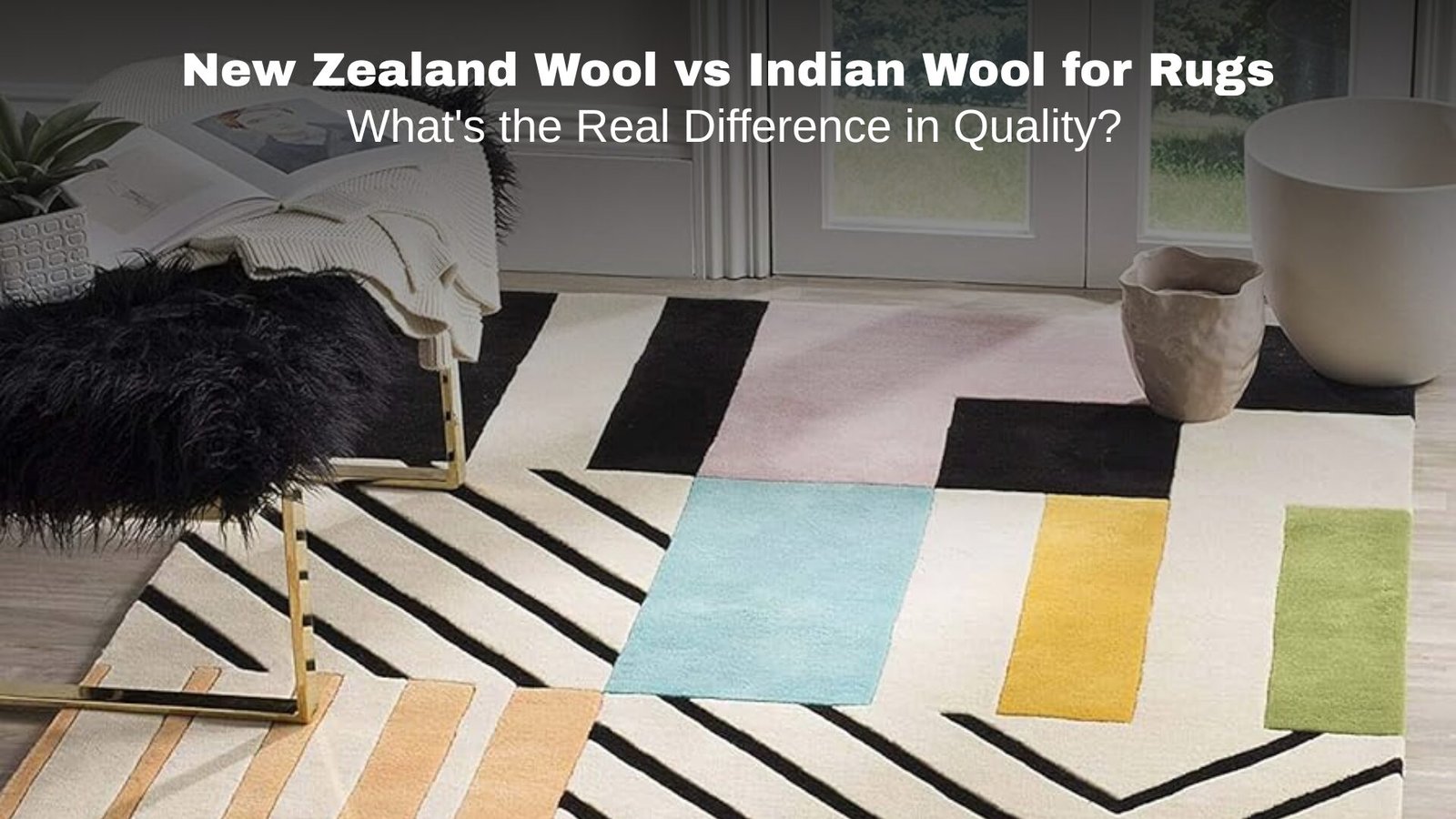
New Zealand Wool vs Indian Wool for Rugs: What’s the Real Difference in Quality?
Why does a New Zealand wool rug cost significantly more than an Indian wool rug—and is it actually worth the premium? If you are investing in a handmade rug, this is the most critical question you can ask, yet many showrooms gloss over the answer with vague marketing speak about “luxury.”
New Zealand wool is prized for its long staple fibers, exceptionally soft micron count, and bright white natural color, which allows it to absorb dyes brilliantly for luxury, low-traffic rugs. In contrast, Indian wool is coarser, shorter, and highly resilient with natural lanolin, making it the ultimate budget-friendly, high-durability choice for heavy-traffic areas. You should choose New Zealand wool for underfoot softness and vibrant colors, and Indian wool for structural longevity.
Table of Contents
What is New Zealand Wool?
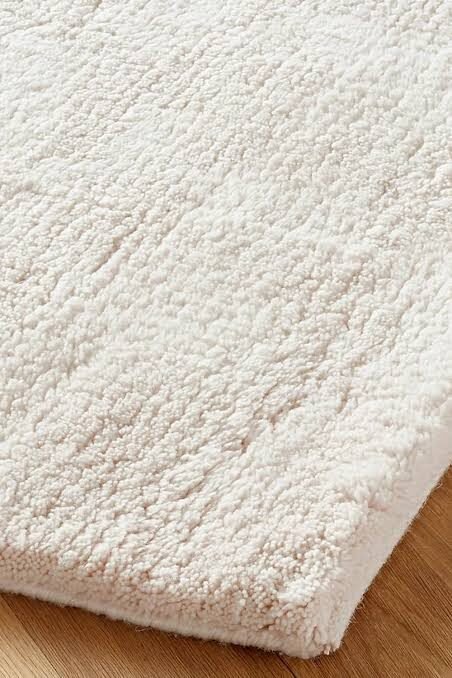
When the rug industry talks about “New Zealand Wool,” we are primarily referring to fleeces from Merino-cross sheep breeds raised in the specific climatic conditions of New Zealand. The environment—abundant clean water, high altitudes, and crisp air—directly impacts the biology of the sheep.
The resulting fleece has three distinct advantages for rug making:
- Staple Length: The fibers are incredibly long. Longer fibers mean fewer breaks in the yarn, which translates directly to significantly less shedding when the rug is placed in your home.
- Fine Micron Count: The diameter of each fiber (measured in microns) is very fine. This is what gives a New Zealand wool rug its signature cloud-like softness underfoot.
- High Lustre and Bright White Base: Naturally, the wool is an incredibly bright, pristine white. This acts like a blank canvas, allowing dyes to penetrate deeply and reflect light beautifully, creating rich, vibrant, and precise color profiles.
What is Indian Wool?
Indian wool comes from indigenous, hardy sheep breeds such as the Chokla, Bikaneri, and Gaddi, raised in the arid and semi-arid regions of Rajasthan and the Himalayas. These sheep endure harsh climates, and their fleece has evolved to be highly protective.
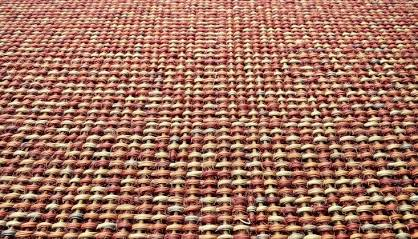
For rug making, Indian wool offers a completely different set of structural benefits:
- Extreme Durability: The fibers have a higher micron count, making them coarser and thicker. While they lack the silky softness of New Zealand wool, they boast an incredible “spring-back” memory. The pile resists crushing under heavy furniture or foot traffic.
- High Natural Lanolin: Indian wool tends to retain a high amount of natural lanolin (wool wax). This acts as a built-in stain repellent and water resistor, making the rugs incredibly forgiving of spills.
- Earthy Natural Tones: Indian wool is naturally off-white, creamy, or slightly yellowish. It absorbs dark, rich, earthy dyes exceptionally well, but cannot achieve the luminous, bright jewel tones possible with New Zealand wool.
The Master Comparison: New Zealand vs. Indian Wool
To help you specify the right material for your next interior project, here is an honest, side-by-side breakdown of how these two fibers perform.
| Attribute | New Zealand Wool | Indian Wool |
| Fibre Length (Staple) | Long (Minimal shedding) | Short to Medium (Moderate shedding initially) |
| Softness (Micron Count) | Very Fine (Plush, soft underfoot) | Coarse (Sturdy, textured underfoot) |
| Natural Lustre | High (Bright white, catches light) | Low (Matte, creamy/off-white) |
| Durability against crushing | High | Extreme (Excellent spring-back) |
| Moth & Stain Resistance | High (When professionally treated) | Very High (Due to natural lanolin content) |
| Dye Absorption | Exceptional (Vibrant, exact color matching) | Good (Best for deep, earthy, or muted tones) |
| Estimated Price Impact | Premium (Higher cost per sqft) | Highly Accessible (Budget-friendly) |
| Best Application | Luxury lounges, bedrooms, fine art pieces | Hallways, dining rooms, flatweave dhurries |
What is Semi Worsted New Zealand Wool?
If you are browsing premium collections, including those at The Wovara, you will frequently encounter the term “Semi Worsted New Zealand Wool.” This refers not to the sheep, but to the spinning process.
Standard woolen yarn is spun with fibers pointing in all different directions, trapping air to create a fluffy, bulky yarn. Worsted yarn goes through an intensive combing process that completely removes any short fibers, aligning only the longest fibers perfectly parallel to each other before spinning.
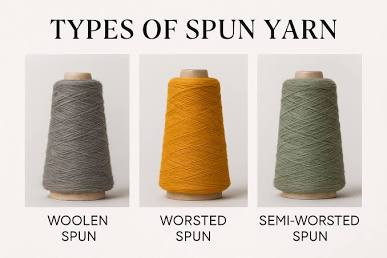
Semi-worsted yarn strikes the perfect balance. It is combed to remove the shedding short fibers and align the strand, but spun slightly looser than a pure worsted yarn.
- The Result: A phenomenally tight, smooth, and highly resilient pile that has almost zero shedding from day one. The line definition in the rug’s pattern becomes razor-sharp, making it the ultimate material for high-end modern, geometric, or heavily carved hand-tufted rugs.
When Indian Wool is Actually the Better Choice
An honest rug consultant will tell you that paying for New Zealand wool isn’t always the right move. Indian wool is structurally superior in several specific scenarios:
- High-Traffic Arteries: For hallways, entry foyers, and commercial hotel lobbies, the coarse, springy nature of Indian wool resists flattening far better than fine Merino fibers.
- Dhurrie-Style Flatweaves: Indian wool is the historic and structural backbone of the traditional flatweave dhurrie. The coarse fiber locks together tightly without a backing, creating a stiff, durable rug that sits perfectly flat.
- Budget-Conscious Projects: When you need a massive 10×14 rug to cover a living room, but the budget is constrained, Indian wool provides all the acoustic and thermal benefits of a natural fiber rug without the premium price tag.
When New Zealand Wool Justifies the Premium
Conversely, there are applications where compromising on fiber quality will ruin the final aesthetic and feel of the room. You should absolutely invest in New Zealand wool for:
- Bedrooms and Lounges: In spaces where you walk barefoot, sit on the floor, or want a deeply luxurious, tactile experience, the fine micron count of New Zealand wool is non-negotiable.
- Fine Hand-Knotted Work: If you are commissioning a rug with a high KPSI (Knots Per Square Inch), the artisan needs fine, strong yarn to tie tiny, intricate knots. New Zealand wool allows for high-definition, complex Persian or modern abstract designs.
- Vibrant and Light Dyes: If your design requires a brilliant sapphire blue, a pure silver-grey, or an exact match to a pastel fabric swatch, only the bright white base of New Zealand wool can deliver that exact chromatic purity.
What About Viscose and Tencel?
As you explore wool rugs, you will often see them blended with Viscose or Tencel (typically in an 80% wool / 20% viscose ratio). Pure wool—even fine New Zealand wool—naturally absorbs light and has a matte finish.
Viscose and Tencel are regenerated cellulose fibers (made from wood pulp) that mimic the extreme sheen of pure silk. By weaving a wool foundation and using Viscose to highlight specific design elements (like a geometric line or a floral petal), we create a high-contrast play of light and shadow. The wool provides the structural durability, while the Viscose adds a dynamic, luxurious sheen that elevates the rug’s visual weight.
How to Verify Wool Quality When Buying
How do you know if you are actually getting the premium wool you are paying for?
- The Pull Test: On a hand-tufted rug, pinch a small tuft of the pile and gently pull upward. If a massive clump of loose fiber comes away in your hand, it is spun from cheap, short-staple wool. A high-quality New Zealand or Semi-Worsted wool rug will yield almost zero loose fibers.
- The Burn Test (For Authenticity): If you can access a loose thread from the fringe or back, light it on fire. Pure wool will smell like burning hair, sputter, self-extinguish quickly, and leave a crumbly black ash. Synthetic fibers like polyester or acrylic will melt like plastic, smell like sweet chemicals, and leave a hard plastic bead.
- Ask the Manufacturer: A reputable brand will tell you exactly what breed or region the wool is sourced from. If they dodge the question or just say “imported wool,” proceed with caution.
Frequently Asked Questions
Is New Zealand wool rug worth the price?
Yes, a New Zealand wool rug is worth the premium if your priority is underfoot softness, zero shedding, and vibrant, precise color matching. Because the fibers are longer and finer, the rug will look significantly more luxurious, feel softer on bare feet, and maintain its structural integrity for decades without shedding heavily into your home.
Is Indian wool good for rugs?
Indian wool is exceptionally good for rugs, particularly in high-traffic areas. Breeds like the Chokla and Bikaneri produce coarse, springy fibers that are naturally coated in lanolin. This makes Indian wool rugs incredibly resilient against heavy furniture crushing and naturally resistant to stains and moisture, though they will not feel as soft as Merino-grade wools.
What is semi worsted wool?
Semi-worsted wool is yarn that has undergone a combing process to remove short, brittle fibers, leaving only the longest fibers aligned parallel to one another before spinning. This results in a tighter, smoother, and stronger yarn that produces a high-definition rug pile with almost zero shedding, compared to traditional, bulkier woolen spun yarn.
How do I know if my rug is pure wool?
The most definitive way to test if a rug is pure wool is the burn test. Clip a tiny, inconspicuous fiber and ignite it. Pure wool will smell distinctly like burning hair, will stop burning once the flame is removed, and will leave behind a crushable, powdery black ash. Synthetic fibers will melt, drip, and form a hard plastic bead.
Which wool rug is best for Indian climate?
For the warm, often humid Indian climate, flatweave Dhurries made from Indian wool or low-pile Handloom rugs are excellent choices, as they do not trap heat or ambient moisture. However, if using air conditioning, a premium New Zealand wool rug is perfectly suitable, as wool is naturally breathable and regulates ambient humidity remarkably well.
Ready to specify the perfect material for your space?
At The Wovara, we never compromise on our raw materials. Explore the cloud-like luxury of our New Zealand Wool pieces, discover the zero-shed precision of our Semi-Worsted collections, or collaborate with us via our Custom Rugs in India portal to build a piece tailored to your exact fiber requirements.