How to Specify a Custom Rug for a Hotel Lobby, Resort, or Commercial Space: The Complete Guide (2026)
The difference between a breathtaking, iconic hotel lobby and one that feels instantly dated usually isn’t the FF&E budget it is the rug specification. Too often, we see hospitality projects fail because a residential rug was dropped into a commercial space, leading to crushed piles, faded colours, and safety hazards within six months.
Specifying a commercial custom rug requires balancing extreme durability with high-end aesthetics. The core specification must define the foot traffic classification, the optimal weave (such as high-KPSI hand-knotted for heavy use), commercial-grade fire retardancy ratings, low pile heights for acoustic management, and specialized latex-free backings. When executed correctly, a bespoke rug acts as the architectural anchor of the space, flawlessly translating the hotel’s brand identity into a resilient, long-lasting foundation.
Table of Contents
Why Hotel Lobby Rugs Are Fundamentally Different
When sourcing a custom rug for hotel lobby India, interior designers must shift their mindset away from residential metrics. A commercial rug is an engineered architectural finish, not just a decorative textile.
- Traffic Volume & KPSI Requirements: A residential living room might see ten footsteps a day; a hotel lobby sees thousands, along with rolling luggage and heavy service carts. For hand-knotted rugs in these zones, the KPSI (Knots Per Square Inch) must be significantly higher than a standard residential piece to ensure the yarn is packed tightly enough to resist crushing.
- Fire Retardancy & Life Safety: Hospitality rugs must meet strict fire and life safety codes. Depending on the jurisdiction and the hotel brand’s global standards, the rug must pass tests like IS 15061 (Indian Standard for textile flammability) or ASTM E648 (Standard Test Method for Critical Radiant Flux of Floor-Covering Systems).
- Acoustics & Ambient Noise: Hotel lobbies are cavernous spaces filled with hard surfaces like marble, glass, and brass. The rug is often the primary acoustic dampener in the room. Specifying the correct pile height and a dense commercial underlay is critical for absorbing the clatter of heels and echoing voices, creating a serene arrival experience.
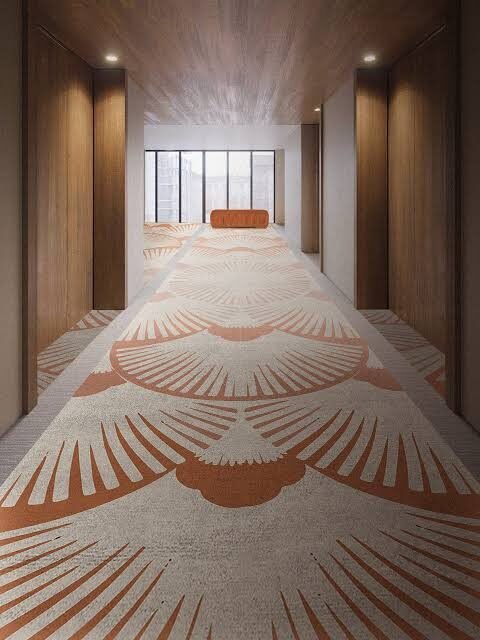
- Brand Identity & Wayfinding: In commercial spaces, the floor is the largest continuous design canvas. A bespoke hospitality rug isn’t just a pretty pattern; it physically manifests the hotel’s design DNA and can be subtly engineered to guide guest flow toward the reception desks or lounge areas.
The 7-Step Specification Guide for Commercial Rugs
To ensure flawless execution when ordering commercial custom rugs India, follow this chronological specification framework.
Step 1: Define the Foot Traffic Classification
Before selecting a colour or a pattern, define the zone’s operational reality:
- Heavy Commercial: Main lobby entrances, primary circulation corridors, and all-day dining venues. (Requires maximum density and low pile).
- Medium Commercial: Spa receptions, executive club lounges, and library spaces.
- Light Commercial / Feature: Presidential suites, private boardrooms, and secondary low-traffic seating nodes.
Step 2: Choose the Right Weave for the Traffic Level
The weave construction determines how the rug handles weight and friction.
- Heavy Traffic: Specify a Hand-Knotted rug with a high KPSI and a low pile height (usually around 6mm to 8mm). The structural integrity of individual knots tied directly to the warp ensures the rug will not delaminate or pull apart under the stress of rolling luggage.
- Medium Traffic: A Hand-Tufted or Handloom rug is excellent here. However, for hospitality rugs specification India, ensure the hand-tufted rug utilizes a commercial-grade, low-VOC, or latex-free backing that won’t degrade under heavy commercial cleaning schedules.
- Accent / Feature Areas: This is where you can specify a luxury Hand-Knotted piece with a higher, plusher pile (10mm to 12mm) to deliver an ultra-premium, residential feel.
Step 3: Select Material by Performance Requirement
Material specification is where many hospitality projects go wrong.
- New Zealand Wool & Semi Worsted NZ Wool: The undisputed king of hospitality flooring. Wool is naturally flame retardant (it self-extinguishes), naturally stain-resistant due to lanolin, and possesses incredible “spring-back” memory to resist crushing. Semi-worsted wool is combed to remove short fibers, resulting in a tight, sharp pile that sheds very little—perfect for hotel environments.
- PET Yarn: For eco-conscious hotel brands or semi-outdoor cabana lounges, PET yarn (spun from recycled plastic) is revolutionary. It mimics the feel of wool but offers maximum stain resistance and is entirely impervious to moisture.
- Viscose / Tencel Blends: Pure viscose or Tencel should never be used in a heavy-traffic lobby, as it crushes and water-spots easily. However, blending 15–20% Tencel into a wool foundation creates a striking, silk-like sheen for feature rugs in lower-traffic luxury zones.
Step 4: Determine Size for Irregular Spaces
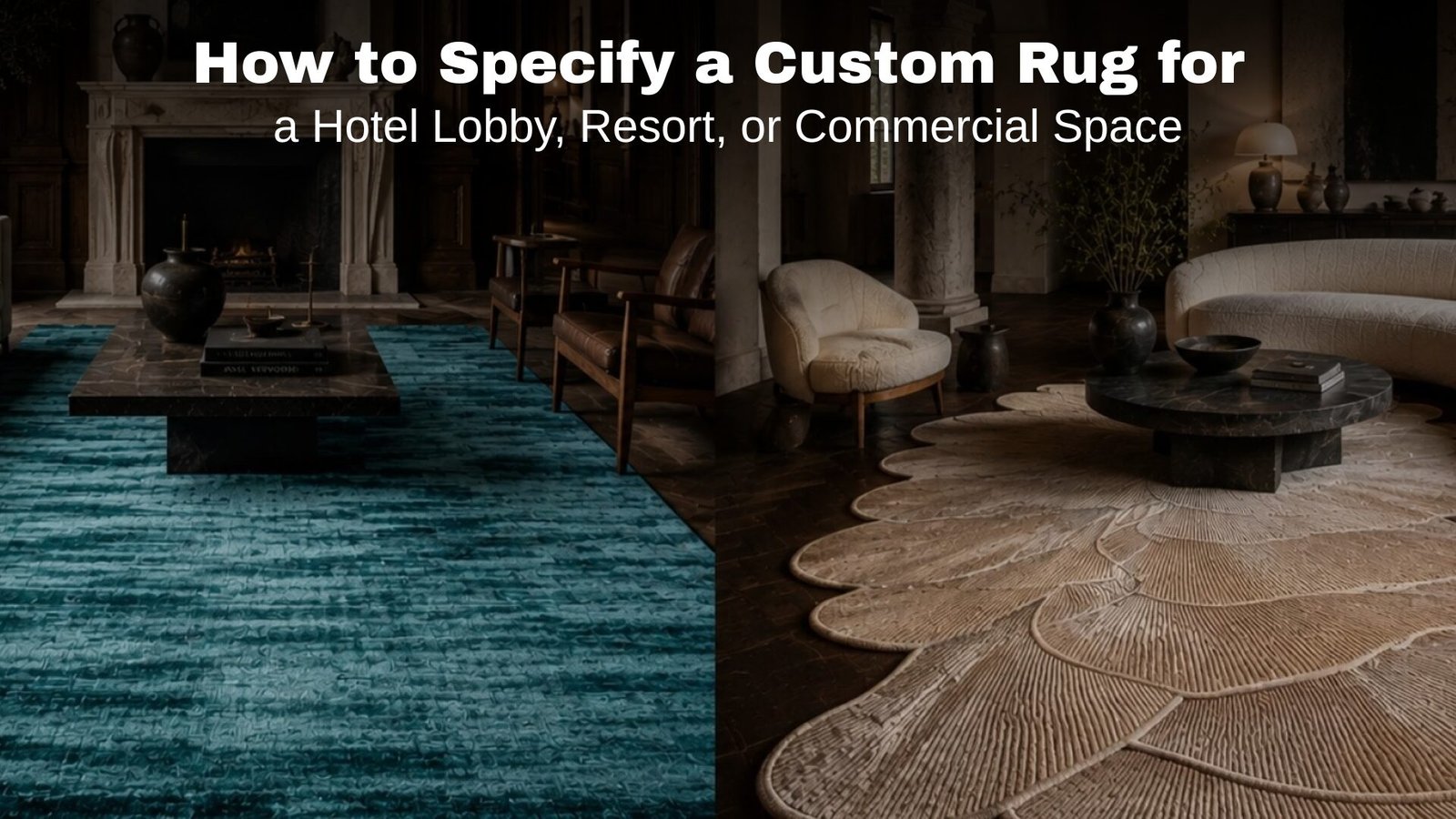
Hotel lobbies rarely feature perfect 90-degree corners. They have sweeping architectural curves, structural columns, and inset floor outlets. Custom sizing is critical. Do not attempt to force a standard rectangular rug into a curved seating lounge. A bespoke hotel rugs manufacturer India like The Wovara will create a custom template that perfectly contours to your architectural floor plan, ensuring the rug looks fully integrated into the building’s design.
Step 5: Design and Pattern
The pattern must serve a dual purpose: aesthetic beauty and soil-hiding capabilities.
- The Brand DNA: The design should reflect the location’s heritage or the hotel’s brand ethos.
- The Practical Reality: Avoid large, unbroken expanses of solid light colours (like stark white or pale cream) in high-traffic zones, as they will immediately show traffic lanes. Opt for intricate, layered patterns, striated textures, or medium-to-dark tonal shifts that naturally camouflage daily soil between deep cleanings.
Step 6: Specify Commercial Backing and Underlay
A rug slipping in a public space is a massive liability. Commercial rugs require heavy-duty, anti-slip backings. Additionally, specifying a dense, commercial-grade underlay pad underneath the rug extends its lifespan by up to 40%, absorbing the concussive force of footsteps before they can grind the rug’s fibers against the hard marble or concrete subfloor.
Step 7: Maintenance Protocol and Cleaning Schedule
Before finalizing the spec, establish the maintenance protocol with the hotel’s housekeeping director. Specify fibers (like wool) that respond well to hot-water extraction and standard commercial cleaning chemicals. Ensure the hotel understands that rotating beater-bar vacuums should not be used on delicate luxury blends.
Lead Time Planning for Commercial Projects
When specifying a custom rug for hotel lobby India, unrealistic timelines are a project killer. Quality cannot be rushed, especially for large-scale pieces.
For a commercial project requiring 50 square meters or more of custom rug space:
- Design & Strike-off Phase (2 to 4 Weeks): This includes translating your CAD drawings into weave maps, selecting yarn colors via Pantone matching, and weaving a physical 2×2 ft “strike-off” sample for the client’s final sign-off.
- Weaving Phase (8 to 16 Weeks): The timeline depends heavily on the weave. Hand-tufted rugs for a large restaurant might take 6 to 8 weeks. A massive, single-piece hand-knotted lobby rug can take 12 to 16 weeks or more, as multiple artisans must sit side-by-side at a custom-built, oversized loom.
- Finishing, Washing & Shipping (2 to 3 Weeks): Commercial rugs require extensive washing, stretching, and shearing to ensure a perfectly level pile before air or sea freight.
Always pad your FF&E installation schedule by at least 3 weeks to account for global logistics.
How The Wovara Works with Hospitality Clients
At The Wovara, our B2B trade program is engineered specifically to eliminate the friction interior designers face when procuring custom hospitality flooring.
- The Brief & CAD Review: You send us your architectural floor plans, seating layouts, and mood boards. Our technical team reviews the traffic flow and recommends the optimal weave and KPSI.
- Yarn Dyeing & Strike-offs: We custom-dye our New Zealand wool to match your exact hex codes or Pantone references, providing a physical strike-off sample so you can present the true texture and color to the hotel ownership group.
- Dedicated Project Management: Throughout the 10 to 14-week weaving process, your procurement team receives milestone updates and production photos direct from our looms in Varanasi.
- Logistics & Installation Guidance: We engineer the rug for transport (often requiring specialized folding for massive pieces) and provide technical guidelines for the on-site installation team to ensure perfect placement over commercial underlays.
Case Study: The Udaipur Heritage Resort
The Challenge: A luxury 5-star heritage resort in Udaipur, Rajasthan, was undergoing a lobby renovation. The FF&E design team needed a massive 12×15 ft centerpiece rug for the main arrival lounge. The brief required the rug to reflect authentic Rajasthani heritage, but the hotel ownership wanted a highly modern, understated color palette rather than traditional bright reds and golds. Furthermore, the rug had to withstand the heavy daily foot traffic of international tour groups with rolling luggage.
The Specification Decisions:
- Weave: We specified a premium Hand-Knotted construction. Because the lobby saw heavy luggage traffic, a hand-tufted rug’s latex backing risked delamination over time. The hand-knotted structure guaranteed decades of resilience.
- Material: We utilized 100% Semi Worsted New Zealand Wool. The semi-worsted spinning process ensured the yarn was incredibly tight and smooth, virtually eliminating shedding in the public space while providing natural flame retardancy.
- Design: Our design team digitized traditional Rajasthani block-print floral motifs, dramatically blowing up the scale. We executed the design in a tonal, “Quiet Luxury” palette of warm greige, soft taupe, and deep charcoal, fulfilling the modern aesthetic requirement while subtly hiding daily dust.
- Pile Height: The pile was sheared to a dense 8mm. This was plush enough to scream “luxury” to arriving guests, but low enough that luggage wheels wouldn’t bog down or crush the fibers.
The Result: Delivered precisely on a 14-week schedule, the rug became the architectural anchor of the Udaipur property. It absorbed the echoing acoustics of the marble lobby and provided a flawless, modern interpretation of local heritage that aligned perfectly with the resort’s global luxury branding.
Frequently Asked Questions
What type of rug is best for hotel lobby?
For a hotel lobby, a hand-knotted rug made from New Zealand Wool is widely considered the best choice. Hand-knotted construction provides the ultimate structural durability required to withstand heavy foot traffic and rolling luggage without delaminating. Wool is naturally flame retardant, highly stain-resistant, and possesses excellent “spring-back” memory, preventing the rug from looking crushed or worn in high-traffic zones.
How do I specify a commercial rug?
To properly specify a commercial rug, you must define the foot traffic classification, select a highly durable weave (like hand-knotted for heavy traffic or commercial-grade hand-tufted for medium traffic), choose resilient materials (like Semi Worsted wool), and mandate commercial fire retardancy standards. You must also specify a low-to-medium pile height for accessibility and require a heavy-duty commercial underlay to extend the rug’s lifespan.
Can a custom rug be made for irregular lobby shapes?
Yes, custom rugs can be manufactured to perfectly fit irregular lobby shapes. A bespoke hotel rugs manufacturer India can weave rugs that accommodate sweeping architectural curves, structural pillars, floor-mounted electrical outlets, and uniquely angled seating arrangements. This ensures the rug looks intentionally integrated into the building’s architecture rather than looking like an afterthought.
What is the lead time for a large custom rug in India?
The lead time for a large custom hospitality rug (50 square meters or more) typically ranges from 12 to 18 weeks. This timeline includes 2 to 4 weeks for design finalization, custom yarn dyeing, and client strike-off approval, followed by 8 to 14 weeks for the actual weaving, washing, shearing, and finishing processes on the loom, depending on the complexity of the weave.
Do hospitality rugs need to be fire retardant?
Yes, hospitality rugs are strictly required to be fire retardant to meet commercial life safety and building codes. In India, they generally must pass the IS 15061 flammability standard, while international projects often require ASTM E648 or EN 13501-1 certification. Specifying 100% natural wool is highly advantageous in hospitality, as wool is inherently flame retardant and self-extinguishing without the need for toxic chemical coatings.
Ready to specify flawless flooring for your next hospitality project?
The Wovara partners with the world’s leading interior designers, FF&E procurement agencies, and luxury hotel brands to engineer uncompromising bespoke rugs.
Discover our trade pricing, request custom strike-offs, and learn how our Varanasi looms can scale to meet your commercial demands at our Partner With Us portal.