Rug Trends 2026: The 8 Styles Indian Interior Designers Are Specifying Right Now
2026 marks a pivotal, exciting shift in Indian interior design a definitive move away from mass-produced, fast-fashion floor coverings toward bespoke, artisanal craftsmanship. We are witnessing a beautiful confluence where cutting-edge global design philosophies meet the unmatched, centuries-old heritage of Indian rug making, transforming the floor into the most vital architectural canvas in a room.
For those navigating rug trends 2026 India, the defining styles are: 1. Japandi Minimalism, 2. Earthy Maximalism, 3. Biophilic Textures, 4. Heritage Indian Revival, 5. Quiet Luxury, 6. Layered Rugs, 7. Eco-Conscious Sustainability, and 8. Statement Runners. This year prioritises highly textured, custom-coloured foundations that elevate a home’s architecture, blending conscious materiality with deeply personal aesthetic expressions.
Table of Contents
Trend 1: Japandi Minimalism
The intersection of Japanese wabi-sabi (finding beauty in imperfection) and Scandinavian hygge (coziness and comfort) has dominated global design, and in 2026, it is the most requested aesthetic among India’s top architects. In fast-paced urban environments like Mumbai, where the modern sea-facing apartment requires a seamless blend of comfort and cutting-edge design, Japandi provides a flagship, meticulously clean aesthetic that feels both futuristic and grounding.
The Aesthetic: Japandi relies on strict, purposeful minimalism. It eschews clutter in favor of clean lines, bringing a nearly architectural discipline to soft furnishings. The colour palette is rigorously controlled: warm greys, oat, unbleached sand, and deep, grounding charcoal.
The Best Rug Choice: A flat-weave dhurrie or a low-pile handloom rug is the perfect foundation here. You want a rug that feels structural and intentional, not overly plush or chaotic. Recommended Materials: Un-dyed Indian Wool for a raw, matte finish, or a blend of Wool and Tencel to introduce a subtle, controlled sheen that catches the light cascading through large, modern windows.
At The Wovara, our handloom weavers excel at creating these quiet, ribbed textures that serve as the ultimate minimalist canvas.
Trend 2: Earthy Maximalism & Dopamine Décor
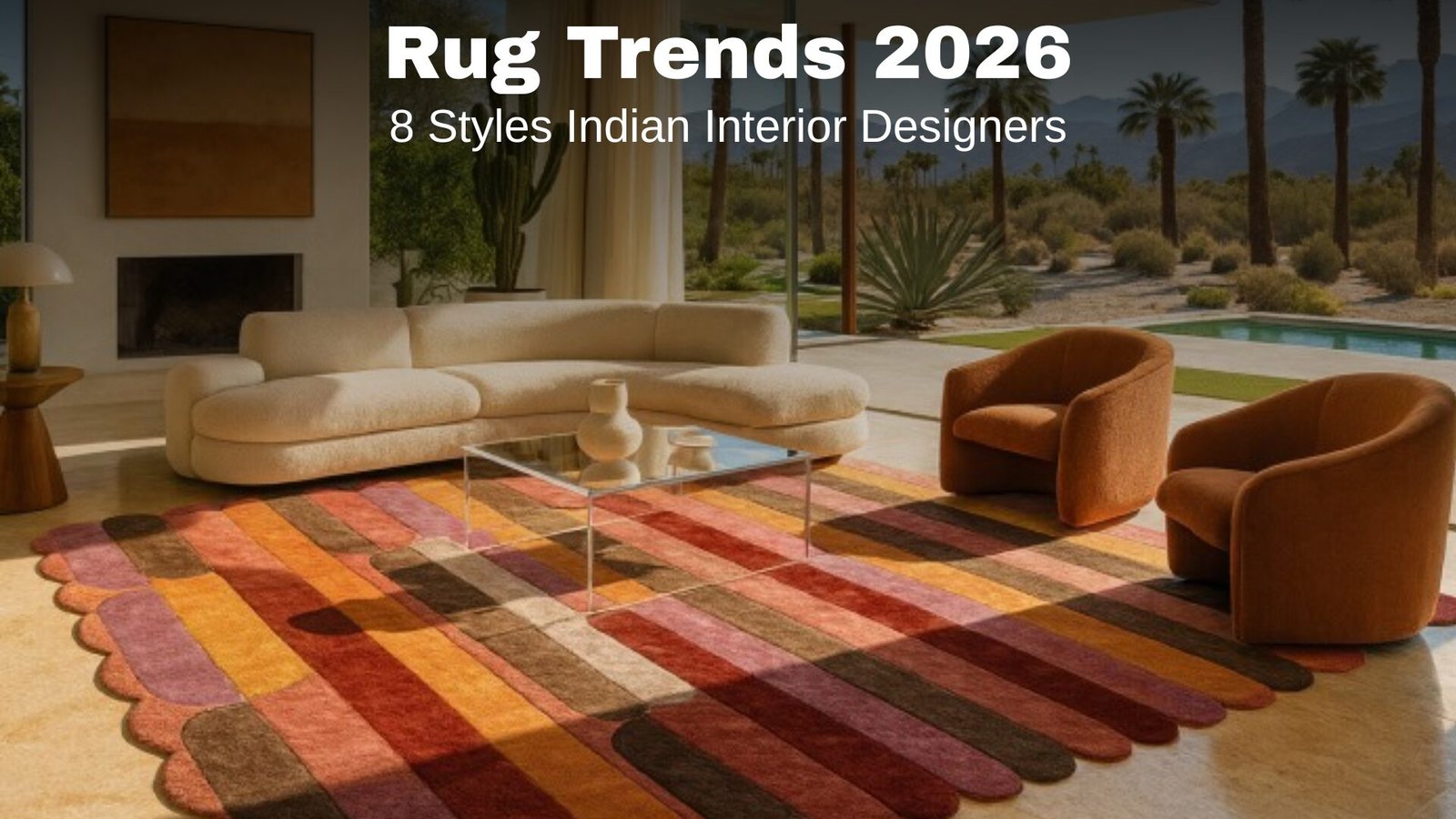
On the exact opposite end of the spectrum is the explosive rise of Dopamine Décor—design that is unapologetically joyful, bold, and designed to trigger happiness. For 2026, this trend has matured from chaotic neon into what we call “Earthy Maximalism.”
The Aesthetic: Think bold, large-scale abstract or geometric patterns, but rendered in a deeply saturated, organic colour palette. We are seeing massive demand for rich, baked terracottas, deep rusts, mustard yellows, and dark, oceanic teals. It is maximalism with a grounding, sophisticated edge.
The Best Rug Choice: A hand-knotted rug featuring a sweeping, abstract geometric pattern. Because hand-knotting allows for incredible line definition and colour separation, it is the ideal weave to execute these bold, art-piece designs without them looking blurry or cheap.
When interior designers are specifying popular rug styles 2026 for a client who wants their living room to feel like a curated gallery, an Earthy Maximalist hand-knotted piece is the undisputed centerpiece.
Trend 3: Biophilic Textures
Biophilia—the innate human instinct to connect with nature—has profoundly influenced interior design rug trends 2026. After years of hard, straight lines, designers are softening spaces by bringing the outdoors inside through organic forms and highly tactile surfaces.
The Aesthetic: Biophilic rugs abandon the standard rectangle. We are crafting custom rugs with irregular, organic borders, undulating curves, and pebble-like shapes. The palette is pulled directly from the forest floor: moss greens, lichen greys, bark browns, and soft sand tones.
The Best Rug Choice: A hand-tufted rug with a mixed-pile technique. By combining areas of cut-pile (which is smooth and velvety) with areas of looped-pile (which is nubby and textured), our artisans create a 3D, topographical surface. Walking across a biophilic hand-tufted rug should feel like walking across a bed of soft moss.
Trend 4: Heritage Indian Revival
There is a massive, incredibly exciting resurgence of pride in indigenous Indian craft traditions. However, the 2026 iteration is not about replicating the heavy, dark reds and dense borders of the 1990s. It is about translating ancient motifs into highly contemporary spaces.
The Aesthetic: Classic motifs—such as Mughal garden medallions, intricate Ikat weaves, and traditional Rajasthani block prints—are being entirely reimagined. Designers are stripping back the chaotic colourways and rendering these historic patterns in modern, monochromatic palettes or unexpected pastel hues. Imagine a 16th-century Mughal floral pattern executed entirely in icy blues and silvers.
The Best Rug Choice: A premium hand-knotted rug. To honour the complexity of an Ikat or a Mughal design, it must be tied knot-by-knot. This approach marries the heritage of Varanasi’s weaving lineage with the aesthetic demands of a 21st-century luxury home.
Trend 5: Quiet Luxury
“If money talks, wealth whispers.” The Quiet Luxury trend, which began in high fashion, has entirely taken over high-end residential interiors. It is the antithesis of flashy branding or loud, trend-driven prints. It focuses entirely on unparalleled material quality, flawless execution, and a timeless, understated elegance.
The Aesthetic: Tonal colour palettes—layers of cream, ivory, taupe, and mushroom. The visual interest comes not from contrasting colours, but from the shadow play created by subtle textures.
The Best Rug Choice: A hand-tufted or hand-knotted rug made from Semi Worsted New Zealand Wool in a tonal, cut-and-loop design. By using only one colour of yarn, but carving the design into the pile using specialized shears, we create a rug that looks incredibly sophisticated and feels profoundly luxurious underfoot. This level of uncompromising quality is exactly what defines custom rug trends India at the highest echelon of the market.
Trend 6: Layered Rugs
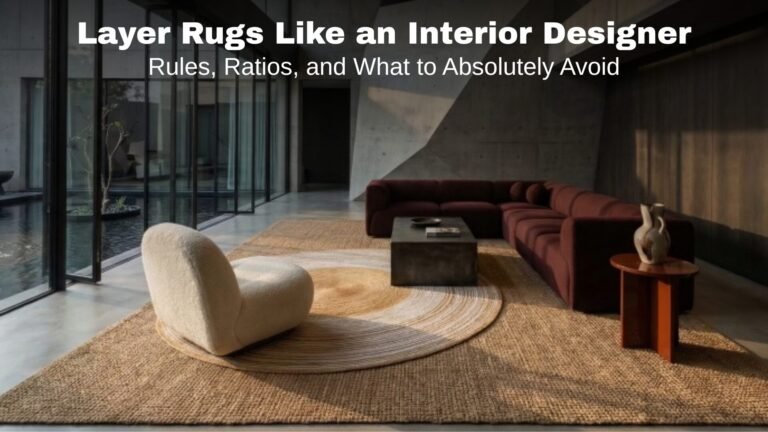
The “rug on rug” layering technique has been a staple in European and American design for years, but in 2026, it is finally hitting the Indian luxury segment in a major way. Layering adds incredible depth, acoustic dampening, and a highly styled, “collected over time” feel to a room.
How to Execute It Without Chaos: The secret to layering is contrasting texture and controlling size.
- The Base: Start with a massive, room-filling flatweave. A neutral Indian Wool Dhurrie or a large jute rug acts as a quiet, textured canvas.
- The Top Layer: Anchor the primary seating area with a smaller, highly patterned, plush rug—like a vintage-inspired hand-knotted piece or a brilliantly coloured hand-tufted abstract.
This technique is exceptionally useful in the large, open-plan living/dining spaces common in modern Indian layouts, allowing you to define specific zones without building walls.
Trend 7: Sustainable & Eco-Conscious Rugs
Sustainability is no longer a niche preference; it is a fundamental requirement for a massive segment of the market. In 2026, clients want to know exactly where their materials come from and what their environmental impact is.
The Material Revolution:
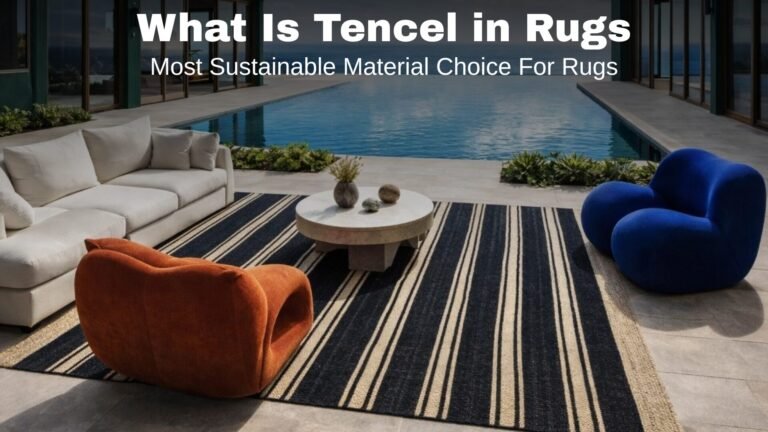
- PET Yarn: Spun entirely from recycled plastic water bottles, PET yarn is a modern miracle. It feels astonishingly like soft wool, but it is highly durable, entirely washable, and diverts plastic from landfills.
- Tencel: A sustainably harvested, wood-pulp based fiber that offers the radiant, luxurious sheen of silk without the environmental toll of traditional silk farming.
- Un-dyed Wools: By skipping the dyeing process entirely, we drastically reduce water usage and eliminate chemical runoff, relying instead on the natural creamy, grey, and black tones of the sheep’s fleece.
The Wovara is deeply committed to this movement, offering fully customisable eco-materials for clients who demand that their luxury interior aligns with their environmental ethics.
Trend 8: Statement Corridor and Hallway Rugs
Historically, the hallway was a purely functional, forgotten transit zone. In 2026, interior designers are treating long corridors as distinct design moments. The statement runner rug has come into its own.
The Aesthetic: Because you don’t spend hours sitting in a hallway, it is the perfect place to take a massive design risk. We are seeing soaring demand for narrow, ultra-long runner rugs in shocking, vibrant colours, bold stripes, or dramatic geometric progressions that draw the eye down the corridor.
The Best Rug Choice: A densely woven Dhurrie or a sturdy Handloom rug. Hallways endure the highest foot traffic in the home, so you need a low-pile, highly durable weave that won’t show crush marks and won’t present a tripping hazard.
The Wovara Advantage: We Custom-Make the Trends
While reading about trends is inspiring, finding the exact rug to match your home’s unique dimensions and your specific design vision in a retail showroom is nearly impossible.
That is where The Wovara changes the paradigm. We do not just sell rugs; we engineer them. Whether you are an interior designer requiring a 10×14 Biophilic hand-tufted rug with precise Pantone color matching, or a homeowner who wants a Japandi handloom runner custom-sized to an exact 3.5′ x 18′ corridor, our artisanal looms in Varanasi can execute it.
You control the weave, the materials (from high-performance PET Yarn to pure New Zealand Wool), the pile height, and the exact colourways. You aren’t just following a trend; you are commissioning a bespoke piece of functional art tailored perfectly to your lifestyle.
Frequently Asked Questions
What rug style is trending in 2026? In 2026, the two most dominant styles are Japandi Minimalism (featuring warm neutrals, clean lines, and low-pile textures) and Earthy Maximalism (highlighting bold, abstract designs in rich, saturated tones like terracotta and deep teal). There is also a strong movement toward Biophilic design, which incorporates organic, irregular shapes and mossy, nature-inspired textures.
What colours are popular for rugs in 2026? The 2026 colour palette is split between warm, grounding neutrals and rich, earthy jewel tones. You will see a heavy emphasis on oatmilk, warm greige, unbleached sand, and charcoal for minimalist spaces. For statement rugs, baked terracotta, deep rust, mustard yellow, and oceanic teals are the most popular choices among interior designers.
What is Japandi style rug? A Japandi style rug blends Japanese wabi-sabi philosophy with Scandinavian minimalism. These rugs are typically characterized by neutral, warm colour palettes (like sand, grey, and cream), subtle structural textures, and a lack of busy patterns. They are usually flat-woven dhurries or low-pile handloom rugs made from natural materials like wool, designed to bring a quiet, calming architectural feel to a room.
Are maximalist rugs in style? Yes, maximalist rugs are highly in style for 2026, but the trend has evolved into “Earthy Maximalism.” Instead of chaotic, neon colours, the new maximalism uses bold, large-scale abstract or geometric patterns rendered in sophisticated, deeply saturated, and earthy colours. These rugs act as the primary piece of artwork in a room, anchoring otherwise neutral furniture.
What is quiet luxury in interior design? Quiet luxury in interior design is an aesthetic that prioritizes uncompromising material quality, flawless craftsmanship, and understated elegance over flashy branding or loud trends. In rugs, this translates to using premium materials like Semi-Worsted New Zealand Wool in tonal, neutral colours. The beauty comes from subtle, high-end textures—like hand-carved cut-and-loop piles—rather than contrasting colours.
Ready to bring 2026’s most sought-after designs into your own space?
Stop compromising with off-the-shelf options. Explore our full capabilities and begin designing your bespoke foundation today at The Wovara’s Custom Rugs in India portal, or browse our curated Online Catalogue for immediate inspiration.